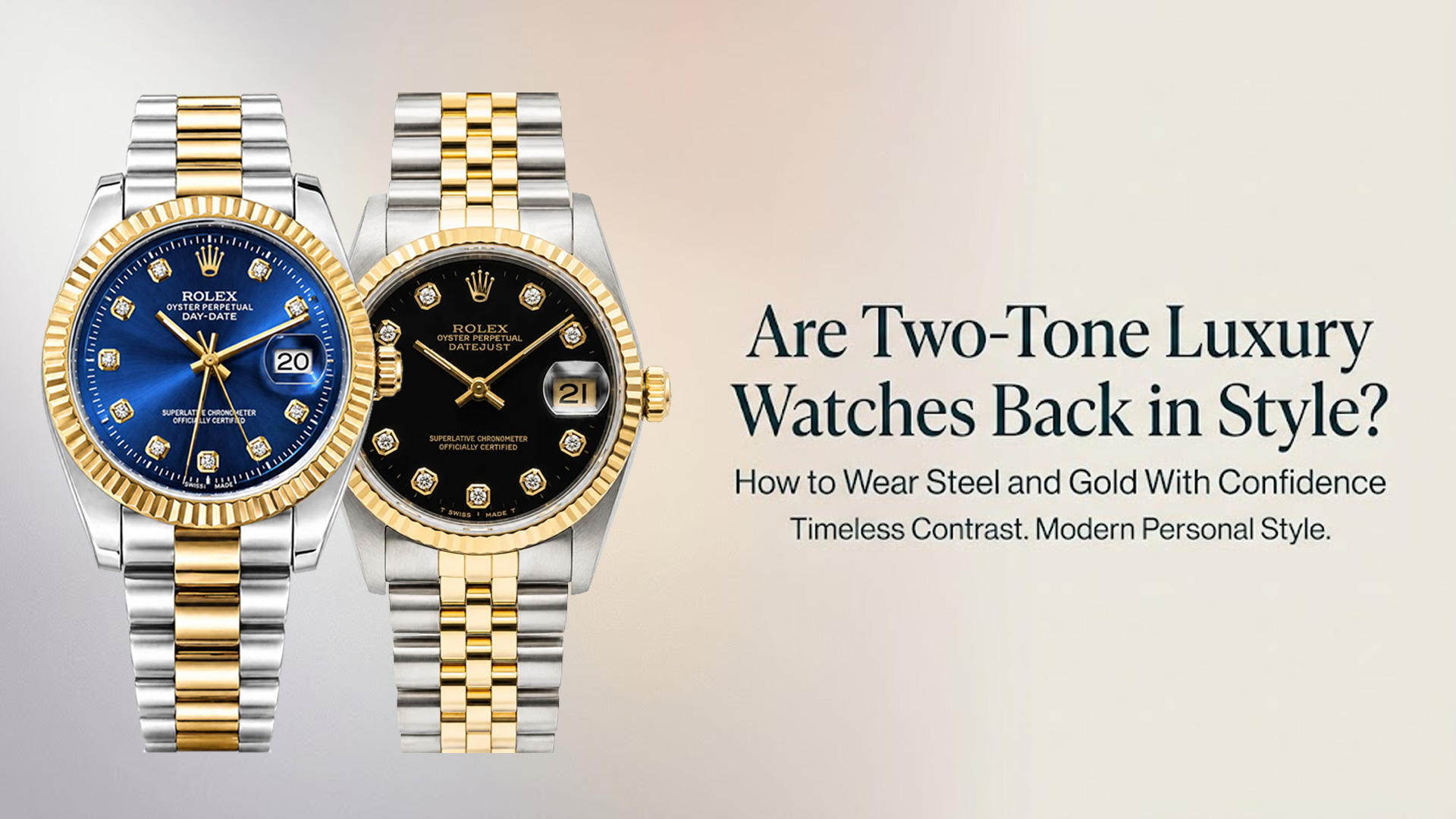
Forget the Old Rules About Mixing Metals—The Right Two-Tone Watch Can Make Your Entire Wardrobe More Interesting
A stainless steel watch is easy to understand. It looks familiar, works with almost anything, and rarely demands much thought when getting dressed.
A full gold watch makes a different statement. Its color and material are immediately noticeable, even when the design itself is relatively simple.
Then there’s the two-tone watch, combining the visual qualities of two metals in one design.
For some buyers, that contrast is precisely the attraction. For others, it raises questions. Is it too formal? Does it belong with modern clothing? Will it clash with silver jewelry? Can a steel-and-gold watch still look understated?
The appeal of two tone luxury watches is that they don’t have to follow a single style formula.
Depending on the materials, proportions, dial, bracelet, and bezel, a two-tone watch can feel sophisticated, expressive, traditional, or surprisingly contemporary.
The important decision isn’t whether mixed-metal watches are fashionable in a particular year. It’s whether a particular combination suits your taste and the way you actually dress.
What Is a Two-Tone Luxury Watch?
A two-tone watch combines two visibly different metal finishes or materials within the overall design.
One familiar example is a watch using stainless steel together with yellow gold or rose gold.
The combination may appear in the bracelet, case, crown, bezel, or other external components, depending on the manufacturer and reference.
However, not every watch with gold-colored details has the same construction.
Some watches combine solid precious-metal components with steel. Others use plated, coated, or differently finished surfaces.
Those distinctions matter.
If you’re purchasing a valuable pre-owned watch, confirm the exact materials specified for its reference instead of assuming that every gold-colored component is made from solid gold.
Why Steel and Gold Work So Well Together
Steel and gold create visual contrast without necessarily requiring a complicated case design.
Steel generally contributes a cool, neutral appearance. Yellow gold adds warmth, while rose-gold tones offer a different, often softer contrast.
The balance between those colors influences the character of the finished watch.
A mostly steel case with restrained gold accents may feel subtle. A bracelet with prominent gold center links can make the same watch considerably more expressive.
This versatility explains why material distribution matters as much as the choice of metals themselves.
Yellow Gold vs Rose Gold: Which Two-Tone Style Should You Choose?
The decision often comes down to the relationship between the metal color, dial, and personal wardrobe.
Yellow Gold and Steel
Yellow gold creates a recognizable contrast against stainless steel.
It works particularly well for buyers who appreciate traditional luxury styling or regularly wear warm-toned jewelry and accessories.
However, yellow gold doesn’t automatically make a watch flashy.
A restrained dial, modest case size, and balanced bracelet can produce a relatively understated result.
Rose Gold and Steel
Rose-gold tones introduce a warmer pink or copper-influenced appearance, depending on the particular alloy.
They can look especially appealing with brown, black, silver, or certain neutral dial finishes.
The exact shade varies by manufacturer and material composition.
Rolex, for example, uses its proprietary Everose gold in selected watches, including two-metal combinations.
Buyers should not assume that every manufacturer’s rose-gold alloy looks or behaves identically.
Rolex Rolesor: A Recognizable Example of Mixed-Metal Watchmaking
Rolex uses the term Rolesor for certain combinations of Oystersteel and gold.
The manufacturer’s official Datejust collection includes examples using yellow gold and Oystersteel, as well as Everose gold and Oystersteel.
These variations show how the same watch family can offer different personalities through materials, bracelet configurations, and dial choices.
Consider two modern Datejust examples:
| Example Reference | Material Combination | Design Character |
| Rolex Datejust 36, 126203 | Oystersteel and yellow gold | Traditional warm-metal contrast |
| Rolex Datejust 41, 126301 | Oystersteel and Everose gold | Contemporary mixed-metal appearance |
These references are examples of particular material configurations, not interchangeable versions of the same watch.
They differ in case size and may also differ in dial and bracelet configuration.
When shopping, identify the complete reference and actual watch details rather than relying on the description “two-tone Rolex.”
Buyers interested in different Datejust configurations can explore Rolex watches through Platinum Times Co. USA and research individual listings.
Can You Wear a Two-Tone Watch With Silver Jewelry?
Yes. There is no requirement that every accessory you wear must have an identical metal color.
A two-tone watch can act as a visual connection between silver-toned and gold-toned jewelry.
For example, a steel-and-yellow-gold watch may complement a silver-colored ring and a warm-toned belt buckle without needing every accessory to match.
The important consideration is whether the combination feels intentional and balanced to you.
Some people prefer a coordinated appearance. Others enjoy mixing metals for a more expressive style.
Neither approach is inherently more refined.
The Three-Outfit Test for Choosing a Two-Tone Watch
Before buying, imagine the watch with three outfits you already wear.
Choose one for professional or formal occasions, one for ordinary casual wear, and one for evenings or social events.
Then consider how the watch would look with each.
Outfit 1: Business or Formal Clothing
A two-tone watch can complement tailored clothing, especially when its dimensions are appropriate and the dial isn’t overly elaborate.
A restrained Datejust configuration may look natural with a business shirt and jacket.
Consider whether the bracelet and case fit comfortably beneath your usual cuff.
Outfit 2: Everyday Casual Wear
A steel-and-gold watch can also work with denim, knitwear, polo shirts, and simple casual clothing.
In fact, the contrast between an expressive watch and understated clothing can be one of the most appealing ways to wear mixed metals.
You don’t need gold-colored accessories throughout the outfit to make the watch look appropriate.
Outfit 3: Dinner or a Special Occasion
For evening wear, polished metal surfaces and warmer tones can introduce visual interest.
A dark or neutral dial may make the combination feel more restrained, while a decorative dial can create a stronger statement.
The goal is to choose a watch that feels comfortable across the situations that matter to you.
Which Dial Colors Work With Two-Tone Watches?
Dial color has a substantial influence on the finished design.
| Dial Color | Possible Visual Effect |
| Black | Creates contrast with warm metal accents |
| White | Offers a clean, bright presentation |
| Champagne | Can reinforce traditional warm-metal styling |
| Silver | Creates a relatively restrained neutral appearance |
| Chocolate or Brown | Can complement selected rose-gold combinations |
| Green | May create a more distinctive contrast depending on the shade |
These are design observations, not rules about which combinations are superior.
The dial’s texture, hour markers, bezel, and lighting conditions can change the overall appearance considerably.
When evaluating pre-owned watches online, ask for clear photographs of the exact dial configuration rather than choosing solely from a generic product image.
Are Two-Tone Luxury Watches Suitable for Everyday Wear?
They can be, provided the individual watch is appropriate for the owner’s activities and expectations.
Case material is only one part of the decision.
Comfort, bracelet fit, water-resistance condition, movement, and overall construction are also important.
Precious-metal components can develop visible signs of wear through regular use. Polished surfaces may show scratches, especially when worn during activities involving repeated contact with hard objects.
That doesn’t mean two-tone watches are unsuitable for daily life.
It simply means their appearance and ownership requirements should be understood rather than assumed.
Buying a Pre-Owned Two-Tone Watch: Four Things to Inspect
- Confirm the Materials
Check the manufacturer’s reference specification and determine which components are made from steel, gold, or other materials.
Do not assume that a gold-colored appearance proves a particular precious-metal content.
- Inspect the Bracelet Carefully
Pay attention to the clasp, links, and areas where different materials meet.
Visible wear may affect the appearance and perceived condition of the watch.
Confirm whether spare links are included and whether the bracelet fits properly.
- Look for Undisclosed Modifications
Some luxury watches receive aftermarket bezels, dials, bracelets, or decorative elements.
A modified watch may still appeal to certain buyers, but changes should be disclosed clearly.
Originality matters particularly when comparing prices between supposedly similar references.
- Compare Total Condition, Not Just Shine
A highly polished watch can look impressive in photographs, but excessive refinishing may alter the original case appearance.
Assess case preservation, bracelet wear, mechanical condition, and documentation together.
A slightly worn example with a clearly documented history may be a more attractive purchase for some buyers than a cosmetically refinished watch with important unanswered questions.
Do Two-Tone Watches Hold Their Value?
There is no universal resale rule for two-tone luxury watches.
Market demand varies by manufacturer, reference, production generation, condition, and buyer preference.
A specific two-tone model may attract strong interest, while another may be less desirable in the secondary market.
Similarly, a steel version may be more sought-after than a two-tone alternative in some comparisons, but the opposite can occur depending on the watches involved.
Be cautious about claims that a particular metal combination will automatically appreciate.
Asking prices, verified transactions, seller fees, and future market conditions should all be considered before drawing financial conclusions.
How to Choose Your First Two-Tone Luxury Watch
If you’re considering mixed metals for the first time, start with a watch design you already like.
Then compare its steel, two-tone, or precious-metal configurations where those versions actually exist.
This approach helps separate your feelings about the case design from your reaction to the materials.
Ask yourself:
- Do I genuinely enjoy the contrast between the metals?
- Which dial complements my usual wardrobe?
- Does the case size feel comfortable?
- Will I enjoy the watch for everyday use or occasional wear?
- Am I comfortable with its condition and maintenance needs?
- Is the asking price justified by the exact reference?
When a particular reference catches your attention, request clarification about its configuration and current condition.
That information is much more useful than a generic statement that two-tone watches are returning to fashion.
Frequently Asked Questions About Two-Tone Luxury Watches
What does two-tone mean on a luxury watch?
It generally describes a watch combining two visibly different metal colors or materials, such as stainless steel and yellow gold. Exact construction varies by reference.
Are two-tone watches outdated?
Style preferences change, but mixed-metal watches remain an established design choice. Suitability depends on the individual watch and the wearer’s taste.
Can I wear a two-tone watch with casual clothes?
Yes. Two-tone designs can complement casual clothing as well as formal outfits, depending on the case, dial, bracelet, and personal style.
Are all gold-colored components on two-tone watches solid gold?
No. Materials and manufacturing methods differ. Confirm the manufacturer’s specification for the exact reference.
What is Rolex Rolesor?
Rolesor is Rolex’s name for specified combinations of Oystersteel and gold, including yellow and Everose gold configurations. The exact components depend on the model.
Are two-tone luxury watches good investments?
They should not be treated as guaranteed investments. Resale results depend on reference-specific demand, condition, purchase price, fees, and market uncertainty.
Final Thoughts: Good Style Doesn’t Need a Single-Metal Rule
Two tone luxury watches appeal to people who appreciate contrast, material detail, and a distinctive approach to personal style.
Some are restrained enough for daily wear. Others make a more prominent statement. The material combination alone doesn’t determine which category a watch belongs to.
The better approach is to choose a design that fits your wardrobe, feels comfortable on your wrist, and meets your expectations for ownership.
Interested in a particular two-tone reference? Browse the Rolex collection at Platinum Times Co. USA and enquire about the exact material, dial, bracelet, and condition of a relevant watch.
A well-chosen two-tone watch doesn’t need to follow a trend. It needs to suit you.

